Each year, #World Food Day reminds all of us at Friends of Ibba Girls School (FIGS) of the shared responsibility we have in building a world where everyone has access to safe, nutritious, and sustainable food. Yet, despite global efforts, hunger and malnutrition remain critical challenges. According to the Food and Agriculture Organisation (FAO), nearly 140 million people faced high levels of acute food insecurity in 2024, with conflict identified as the leading cause. Alongside conflict, climate change is driving shifts in crop yields, altering fish populations, and increasing the spread of pests and diseases that threaten already fragile food systems. South Sudan, which has endured decades of conflict and instability, remains among the countries most severely affected by hunger. The South Sudan: IPC Acute Food Insecurity and Malnutrition Snapshot (2025) reports that more than 7.7 million people—around half the population—are expected to face acute food insecurity between April and July 2025, including over 83,000 people experiencing catastrophic levels of hunger.
Friends of Ibba Girls School (FIGS), a UK charity supporting the education of over 300 girls at Ibba Girls Boarding School in South Sudan, works to ensure that access to nutritious food is a key part of that education.
Good nutrition is the foundation of health and learning, but sustainable food systems are the foundation of nutrition itself. The FAO highlights that sustainable development will not succeed unless it places local communities at its centre, in turn, empowering farmers, fisherfolk, and young people with the tools and decision-making power to manage natural resources wisely. When communities can grow food sustainably, they not only feed themselves but also nurture the land for generations to come.
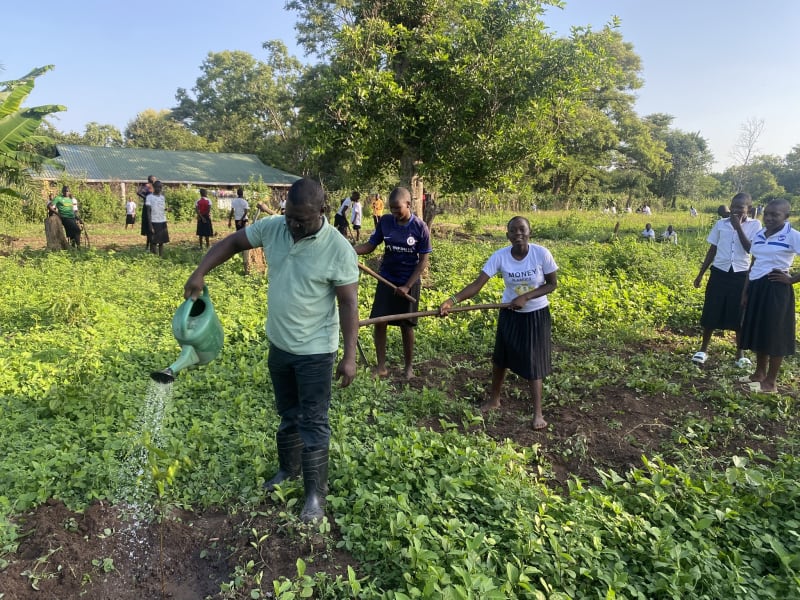
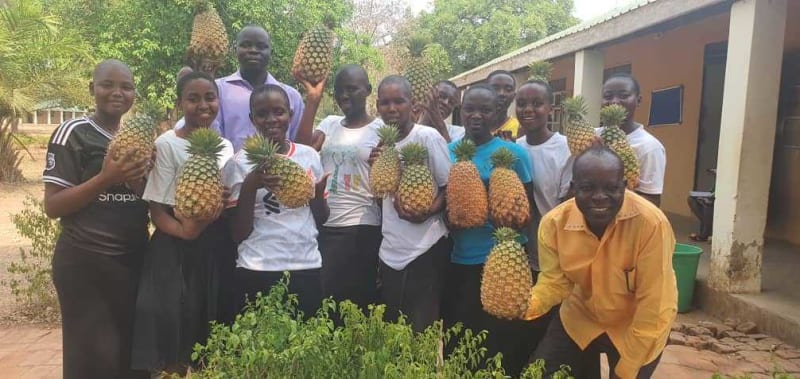
At Ibba Girls Boarding School (IGBS) in South Sudan, these global challenges are met with local action. This year, the school has expanded its farm by one and a half hectares, giving each class its own plot of land to cultivate. Under the guidance of Agriculture Teacher Mr Tabani John, students are learning to grow a variety of crops, including maize, spinach, eggplant, and tomatoes. Plans are also underway to plant 400 coffee seedlings and 56 orange trees, both to enrich the diet at school and to generate future income.
“We have planted maize and hope that the harvest will reduce the expenditure on food,” explains Head Teacher Rita Akelo. “After maize, we intend to plant coffee and oranges. This will help the school generate income in the near future.”
The school garden has become more than a food source; it is a classroom for life. As a Secondary 4 student shared, “My experience in the garden has been marvellous because it’s a time we share different skills from our homes and learn teamwork. Our teachers remind us that agriculture is the backbone of our country.”
For other students, the experience has also bridged the gap between theory and practice:
“The garden has helped me transform my classroom knowledge into real-life skills. I was happy knowing we’ll eat maize flour produced within our school.”
Additionally, the benefits of the farm are reaching families beyond the school gates. As one student explained: “The skills I’ve learnt here have enabled me to teach my mother back home. Now our family grows vegetables like tomatoes and eggplants, which we sell to buy essentials like salt and soap.”
Through this initiative, IGBS is not only cultivating crops, but also self-reliance, resilience, and empowerment. With support from Friends of Ibba Girls School (FIGS), the school’s farm is helping young women become leaders in sustainable agriculture, ensuring that the lessons of World Food Day are lived every day in the fields of Ibba.