
Investment in Girls' Education Contributes to Peace-Making, Truth, Justice and Reconciliation in South Sudan
FIGS stands in solidarity today with all those suffering the unspeakable horrors of earthquake, war, blitz, siege, starvation, exile, trauma, gender-based violence, and crimes against humanity.
We stand particularly alongside our friends in South Sudan as they respond to the challenge from last week’s ecumenical peace pilgrimage to Juba, to stop the civil war and the internecine conflicts which have divided this long-suffering country for so many years.
We wrote personally to Pope Francis, Archbishop Justin Welby, and the Moderator of the Church of Scotland, Iain Greenshields, before they set off for South Sudan, to express support for their courageous efforts and to suggest that Ibba Girls' Boarding School is a pioneering example (a practical parable) of peace-making in practice.
In their meetings in Juba last week the three of them argued consistently that peace cannot be achieved by pious promises or by written statements of intent alone. It cannot be trickled down from above but depends upon changed daily behaviours in families, communities, churches, and governments at all levels.
"In the name of God, the God in whom so many people of #SouthSudan believe, now is the time to say ‘no more of this:’ No more bloodshed, no more violence, no more leaving your people athirst for peace. Leave the time of war behind and let a time of peace dawn!"#PopeFrancis pic.twitter.com/57IxfmWO2E
— Vatican News (@VaticanNews) February 3, 2023
Several of the most effective peace-makers we have worked with in South Sudan over the last 10 years, and in other countries (like Archbishop Desmond Tutu in South Africa), have shown how a process of truth, justice and reconciliation must take place before painful conflicts can be resolved.
Good schools like Ibba Girls' Boarding School (IGBS) act as an island of peace within the turbulence, providing a safe space for good quality teaching and learning, where students from different backgrounds can live, study and play together, protected from the wider national conflict and trauma.
Good schools like IGBS give people a visible demonstration of what peace can look like in practice, and the knowledge and skills to lead their families, communities and their country into a more peaceful process of political, economic and social development.
IGBS is a Community Where Peace-Making, Truth, Justice and Reconciliation is Learned and Practised in 3 Key Ways:
1. Through Learning to Know – through the academic curriculum, girls are given the opportunity to use their literacy and numeracy skills as tools to acquire a knowledge and understanding of the world around them. The ability to understand, question and challenge preconceived ideas. Peace studies is a cross-cutting theme underpinning every aspect of the syllabus, as well as through specific topics studied as part of the social studies curriculum in both the primary and secondary school.
2. Through Learning to ‘Do’ – All students take part in a wide range of co-curricular activities. Through regular Friday afternoon debates, in the election of their prefects and student leaders, and by representing the school in events in the community, students develop confidence in speaking to an audience and listening to other points of view.
3. Through Learning to Live Together - IGBS students come with many different backgrounds and life experiences. By living together 24 hours a day and 7 days a week, they learn the social skills necessary for living and working together collaboratively; being understanding and caring of those with different viewpoints; having empathy, tolerance and a willingness to be adaptable; to see the importance of working as a team and putting the needs of others and the wider community above individual interests and personal desires.
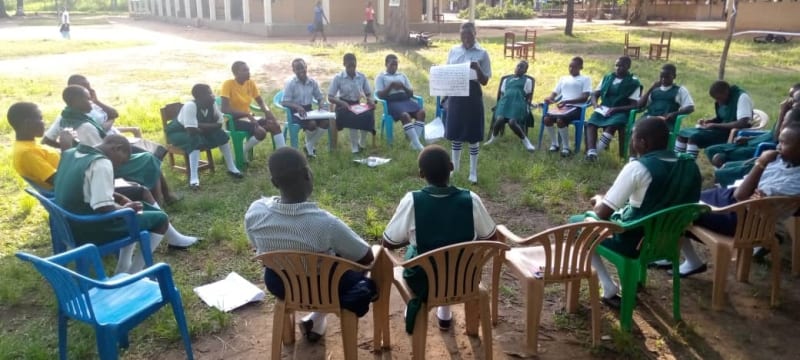
The IGBS motto is “sharing the light of wisdom”. This is the precious gift which girls from IGBS contribute to practical peace-making in their communities and in their country.
Let’s recognise and salute those who pioneered this ecumenical oasis of peace within a deeply divided society.


